
Flooring Adhesives
At Builder Depot, we sell strong, reliable adhesives to help you lay your new floor with confidence. Designed to secure flooring firmly to the subfloor, our range helps prevent movement, lifting and long-term wear. Whether you’re fitting solid wood, vinyl, carpet or engineered flooring, you’ll find suitable flooring glue from trusted trade brands, including Tover, Bona and Crown, with quantity discounts available for larger installations.
Read More Read Less-
 Quantity Discount
£77.94 Inc VAT As low as From £73.14 Inc VAT£5.20 Per kg
-
 Special Price From £42.00 Inc VAT Regular Price From £49.74 Inc VAT£7.00 Per kg
-
 Quantity Discount
£109.14 Inc VAT As low as From £105.54 Inc VAT£6.82 Per kg
-
 Quantity Discount
£100.14 Inc VAT As low as From £91.74 Inc VAT£5.57 Per kg
-
-
-
-
-
-
-
 Quantity Discount
£8.70 Inc VAT As low as From £7.14 Inc VAT£30.00 Per L

Choosing the right flooring adhesive
How to choose the right flooring adhesive
Choosing the right floor adhesive is crucial for a secure, long-lasting finish. Different floor coverings and subfloors place different demands on a floor glue, so it pays to match the product to the job rather than relying on a one-size-fits-all option. At Builder Depot, our flooring adhesive range includes trusted brands like Tover, Bona, and Crown.
You need to start with the type of flooring you are installing. Engineered wood, solid wood, vinyl, laminate and carpet each need adhesives designed for their material. Wood benefits from flexible adhesives that allow natural movement, whilst carpet products hold fibres firmly without setting too rigidly. Always follow the flooring manufacturer's recommendations, as the wrong product can affect performance and warranties.
The condition of the subfloor also matters. Concrete, timber and plywood may need priming before installation depending on their absorbency rate. A clean, dry and level base gives the strongest bond, whilst moisture-prone areas such as kitchens or ground floors may need a moisture-resistant adhesive or a damp-proof system. Finally, check traffic levels, open time and curing time, as heavily used areas and larger installations benefit from stronger, trade-grade products with more working time.
What is MS polymer flooring adhesive?
Most modern wood floor adhesives are MS polymer adhesives (silane-modified polymers). These are single-component, ready-to-use products that are solvent-free and isocyanate-free, and they remain permanently flexible once cured, so the floor can move without breaking the bond. That flexibility, combined with a strong early grab, makes MS polymer the standard choice for glue-down solid and engineered wood.
Adhesive type overview

Flooring adhesive by floor type
What adhesive should you use for wood flooring?
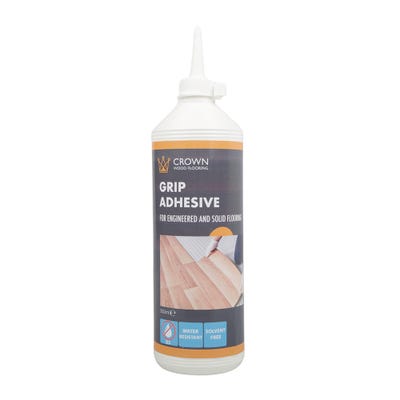
For solid wood, engineered wood, bamboo, and parquet, use a flexible wood floor adhesive such as Crown MA MAX wood floor adhesive, which grabs quickly and bonds to most subfloors, including those with underfloor heating.
What adhesive to use for parquet flooring
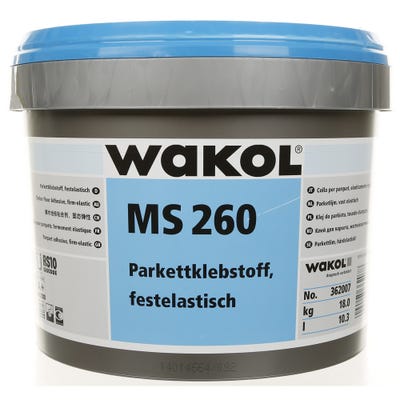
Parquet needs a strong yet flexible adhesive to accommodate the expansion and contraction of the wooden blocks. An MS polymer parquet flooring glue gives high initial tack, long-term strength and moisture resistance on both timber and concrete subfloors. Lecol 5500 is a rigid, solvent-based alternative for parquet or narrow strips on a firm, well-prepared base. Careful subfloor preparation is especially important with parquet, as uneven or contaminated surfaces affect both the bond and the finished appearance.
What adhesive for vinyl flooring?
Vinyl needs a specialist vinyl floor adhesive that stays flexible once cured, helping the floor cope with movement and temperature changes without lifting or cracking. Sheet vinyl usually requires a full-spread vinyl glue with a longer open time to ensure accurate positioning.
For luxury vinyl tiles and planks, a purpose-made LVT adhesive gives strong initial grab with long-term hold. Permanent installations use a full-spread LVT adhesive, whilst loose-lay tiles use a tackifier that stays tacky so tiles can be lifted and replaced. See the vinyl floor adhesive range for suitable products.
What adhesive for laminate flooring
Laminate is usually installed as a floating floor, so laminate flooring adhesive is only needed for securing joints, fitting trims, or fixing boards where floating is unsuitable. A laminate-specific PVA-type laminate floor glue bonds the joints without damaging the board's layered construction, giving a firm hold whilst allowing slight movement to reduce gaps and squeaking over time.
What adhesive for carpet flooring
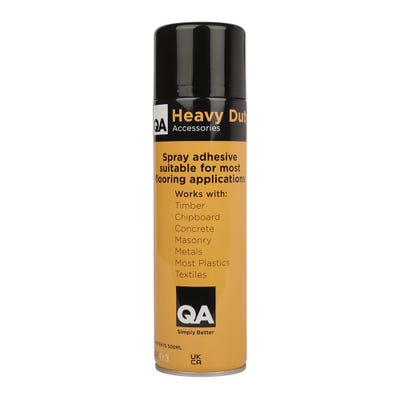
Carpet needs a carpet adhesive that secures the backing whilst staying flexible. Carpet tile adhesive is often a tackifier so individual tiles can be lifted and replaced, whilst broadloom and high-traffic areas need a heavier-duty carpet glue or spray adhesive. Keep the subfloor smooth and clean to stop imperfections showing through and to reduce lifting, rippling, and movement over time. See the carpet adhesive range for options.
Fitting and applying flooring adhesive
Should you glue or float engineered wood flooring?
This is one of the most common questions when laying wood floors. Engineered and solid boards can be glued down or floated. Glue-down, using a flexible wood floor adhesive, gives the most stable, solid and quiet floor and suits concrete or timber subfloors and underfloor heating. Floating a floor over underlay is quicker but can feel less solid underfoot, and laminate is nearly always floated with a click system. Whichever method you choose, follow the flooring manufacturer's instructions, as this affects the warranty.

Can you use flooring adhesive with underfloor heating?
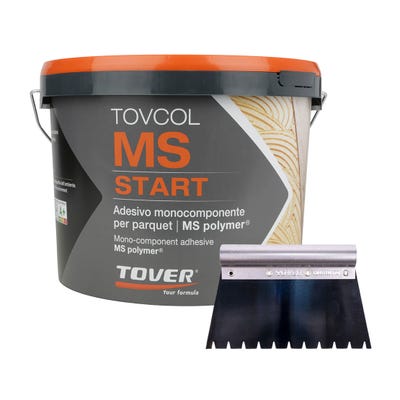
Yes, provided the adhesive is rated for it. Flexible MS polymer wood floor adhesives such as Tover Tovcol MS Start and Crown MS MAX (rated up to 28°C) are suitable for underfloor heating, and Lecol 5500 is also compatible. Commission the underfloor heating and follow the manufacturer's warm-up and cool-down schedule before laying and after installation, as sudden temperature changes can stress a fresh bond.
How much flooring adhesive do you need?
Coverage depends on the product, the trowel notch, and the subfloor. As a guide, trowel-applied MS polymer wood adhesives cover roughly 1m² per kilogram (around 0.8 to 1.2kg/m²), so a 15kg tub typically covers about 15 to 19m².
How to use flooring adhesive

Before starting, make sure the subfloor is clean, dry, sound, and free from dust, grease, or loose material. Level any uneven areas first, as adhesive will not compensate for dips or ridges. Prime absorbent surfaces where the product requires it. Apply the adhesive evenly with the recommended notched trowel, using the correct notch size for proper coverage and bond strength. Lay the flooring within the stated open time, apply firm, even pressure, and use a floor roller where recommended.
